What’s Happening
Ofcom is enforcing new electromagnetic compatibility (EMC) standards for small satellites under the Wireless Telegraphy Act:
- CubeSats must meet ISO 11452 and CE EMC emissions limits—both pre-launch and in orbit.
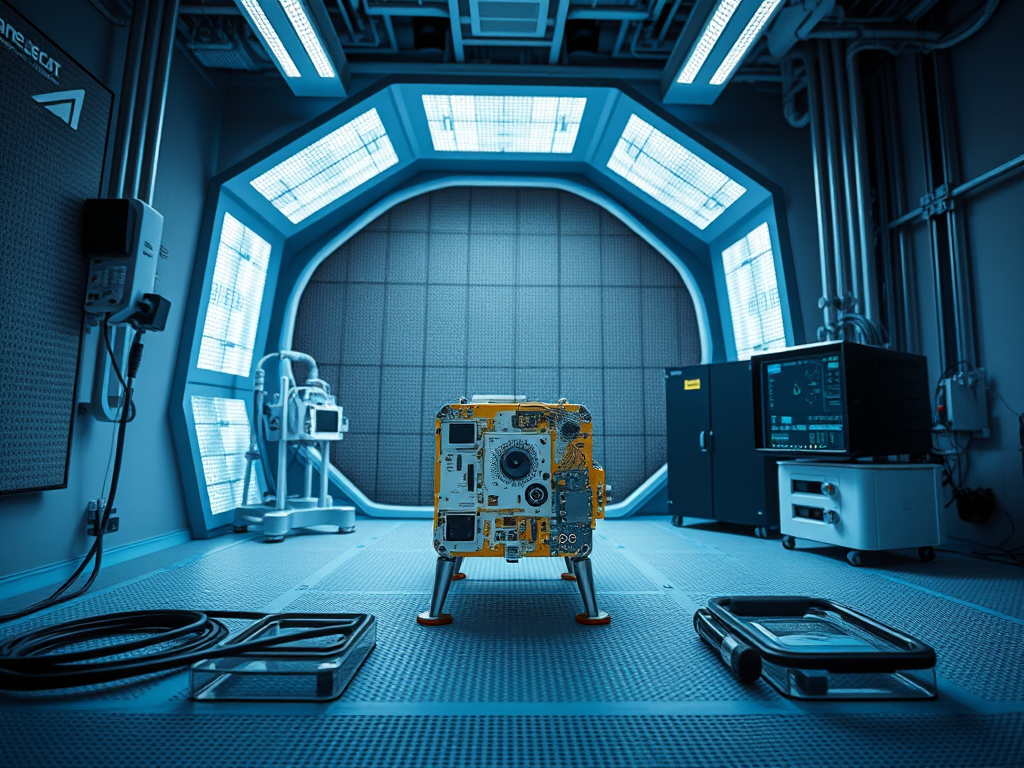
- Environmental testing now includes thermal cycling and vibration testing under near-vacuum.
- Post-launch telemetry must monitor emissions and chassis degradation.
Why It Matters
UK-based CubeSat developers can no longer rely solely on lab testing or commercial off-the-shelf (COTS) hardware. Non-compliance with EMC thresholds—especially during orbit temperature swings—can lead to revoked licenses or denied future launches. Missions must now prove their spacecraft won’t interfere with other services even under stress conditions.
Technical Checklist
- EMC Lab Testing
- Conduct emissions & immunity tests (ISO/IEC 61000-4-3).
- Test chassis under vacuum, thermal, and vibration loads.
- In-Orbit Verification
- Include sensors for EMI and RF leakage detection.
- Downlink EMC data in beacon packets.
- Regulatory Documentation
- Maintain testing certificates.
- File environmental compliance report with Ofcom.
Scenarios & Recommendations
Student Payload
Challenge: COTS sensors fail EMC in thermal vacuum. Recommendation: Replace with shielded alternatives or use add-on RF gaskets. Use pre-certified components wherever possible.
Multi-payload Research Mission
Challenge: Unexpected EMI between internal modules. Recommendation: Perform module isolation tests. Use RF absorbers and internal shielding between payload bays.
UK–EU Joint Launch
Challenge: Dual EMC compliance (CE + Ofcom). Recommendation: Harmonize to the stricter standard. Share test facility time across both regimes and coordinate documentation.
Leave a Reply